Get the stock in shape! It’s all there.
… was the theme of the 23rd Bauz! Congress.
On the first two days of the congress, research projects, architecture and development projects from the construction industry were presented. In workshops, individual topics were explored in greater depth by cooperation partners of the BauZ! Congress. Seven sessions and one in-depth session addressed the topics, each moderated by members of the BauZ! Advisory Board.
Session 1: Framework conditions for a circular city
Chair: Susanne Formanek (President of IBO Vienna)
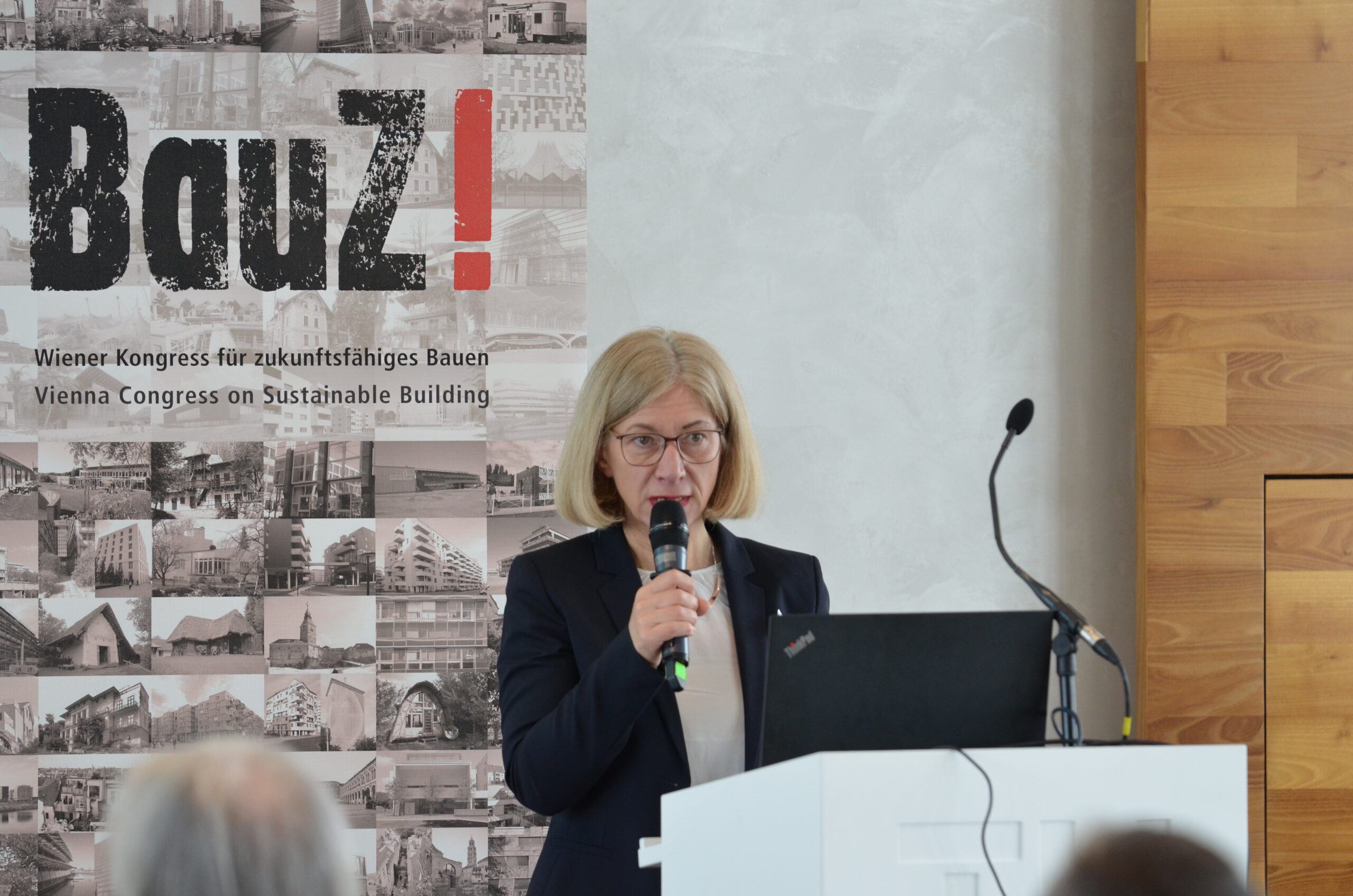 Foto: © Enzberg
Iva Kovacic, Vienna University of Technology: M_hub: a web-based platform serving as a ‘data hub for the collection and analysis of material compositions in the City of Vienna’s building stock’, designed to systematically record, analyse and predict the material composition of buildings.
This was followed by two keynote presentations:
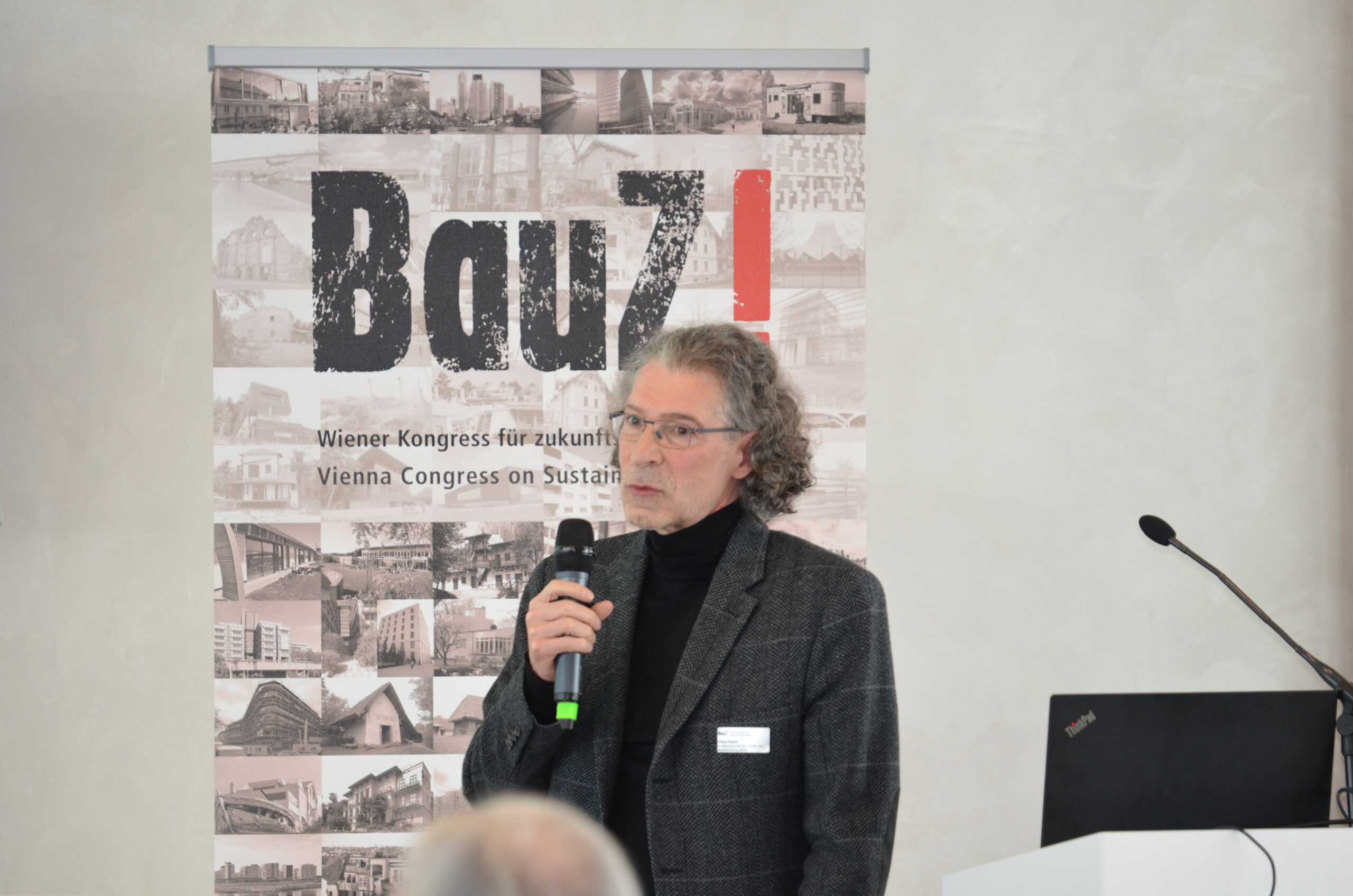
Foto: © Enzberg
Claus Asam (BBSR, Berlin) spoke about the new ‘cumulative raw material use indicator (RMI)’, which is sensitive to the use of primary raw materials. In addition, an assessment method for recyclable building structures was developed in collaboration with the IBO.
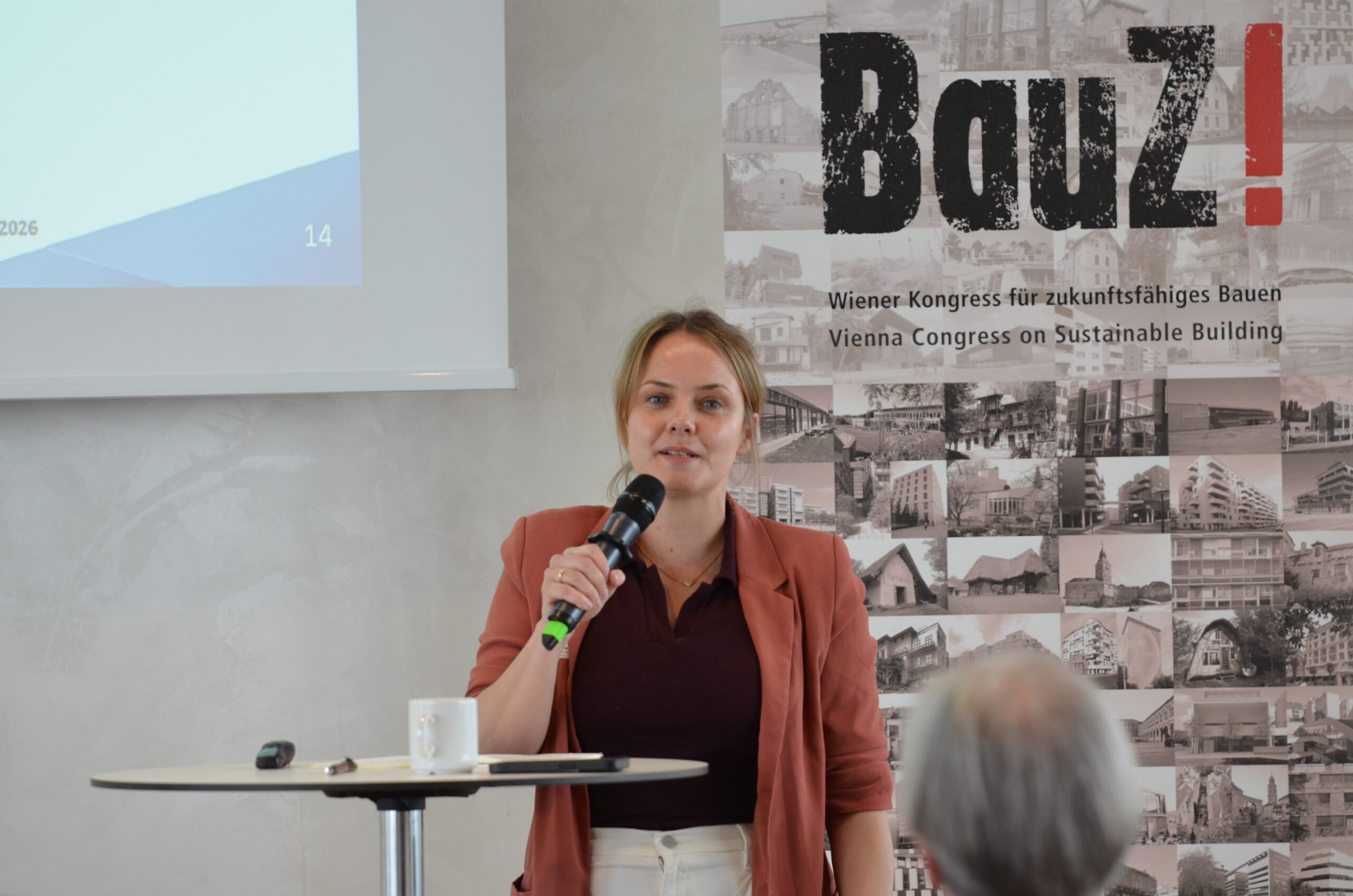
Foto: © Enzberg
Bernadette Luger (City of Vienna, Municipal Directorate for Construction and Technology) presented Vienna’s circular economy strategy, comprising three elements: strategy (orientation), circularity factor (practical work) and Urban Living Lab (collaborative learning).
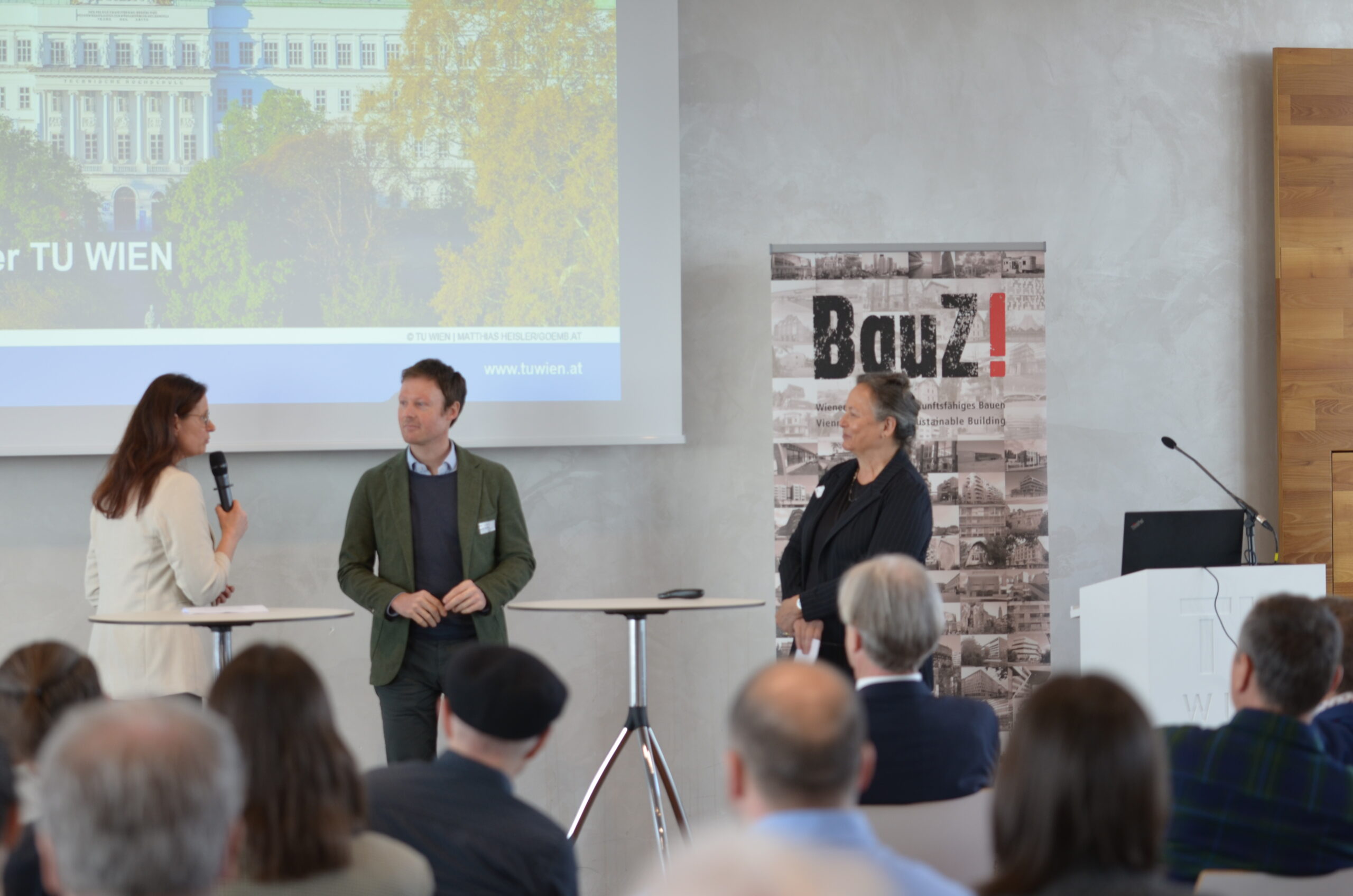
Foto: © Enzberg
The event concluded with welcoming remarks from Hannes Warmuth (BMIMI) and Karin Stieldorf (Vienna University of Technology, Institute of Architecture and Design).
Session 2: Continuing to build within the (industrial) built environment
Chair: Martin Huber (Construction, Energy and Environment Cluster Lower Austria)
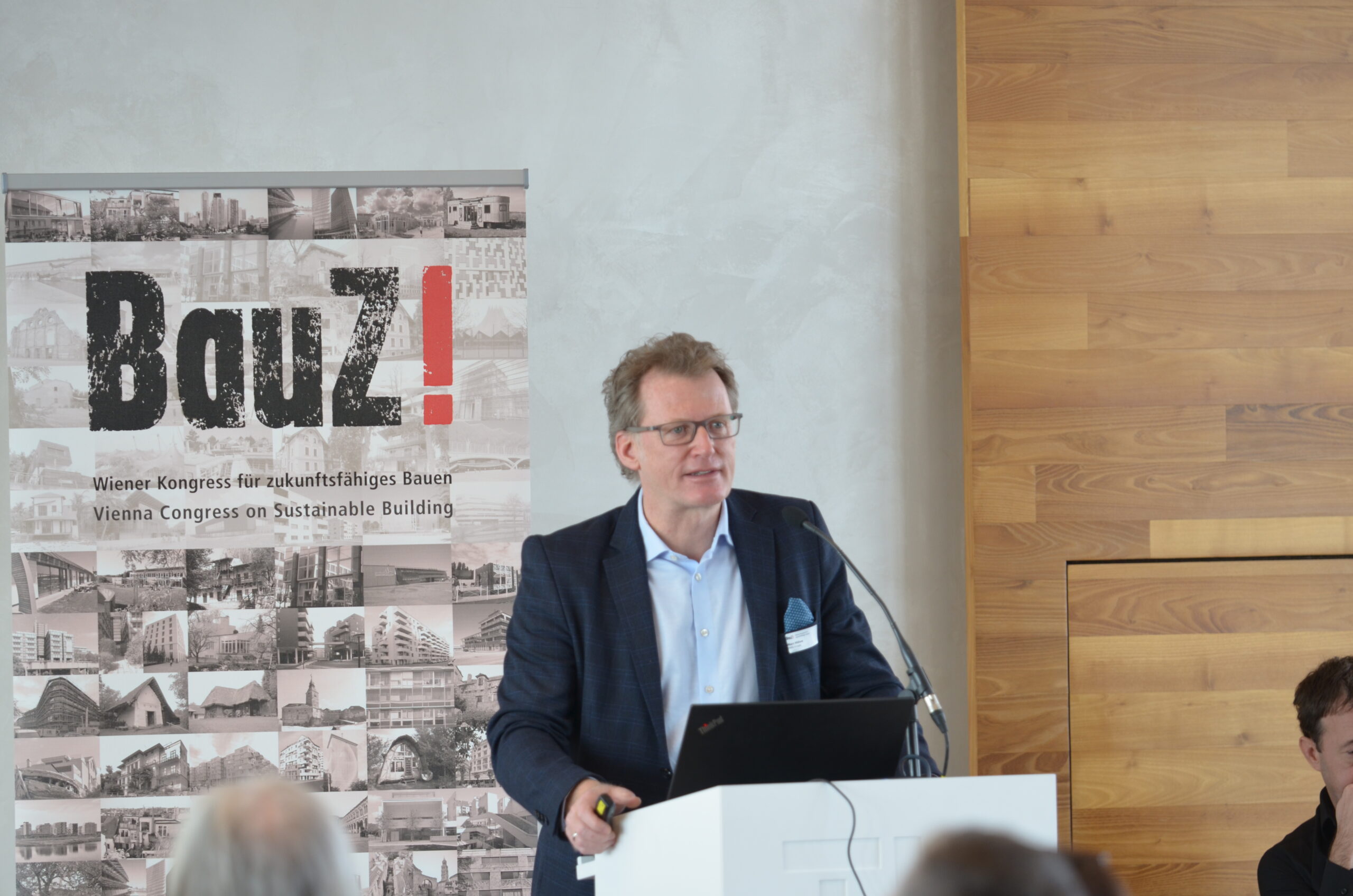
Foto: © Enzberg
Marc Guido Höhne (DELTA Group, Vienna) presented ‘Brownfield Development as a Catalyst for Sustainable Transformation’. Projects such as Promprylad.Renovation demonstrate how brownfield sites can become focal points for local development.
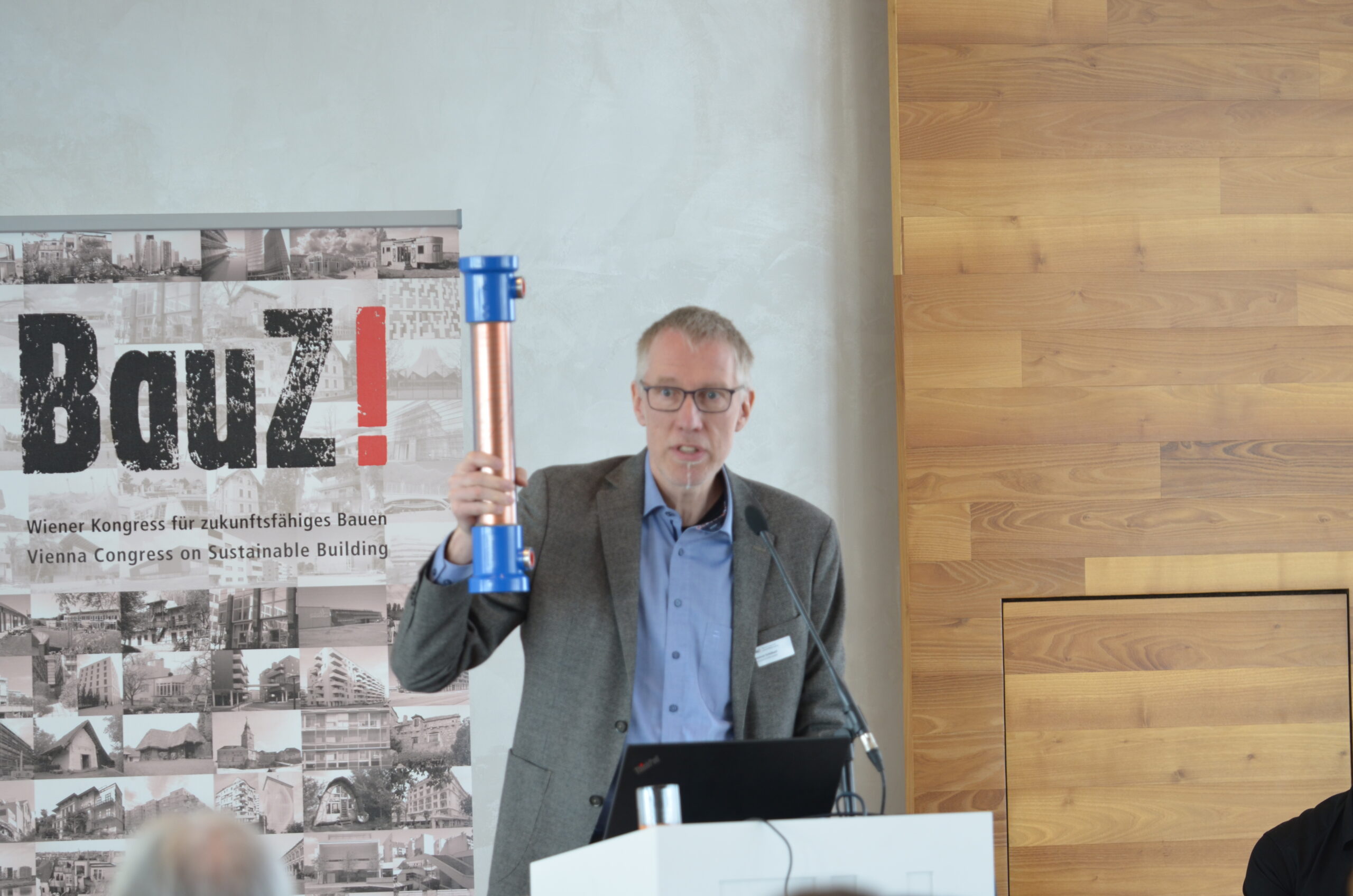
Foto: © Enzberg
Helmut Schöberl (Schöberl & Pöll, Vienna) showcased the refurbishment of the Gründerzeit building at Fernkorngasse 41 using eco-friendly building materials and wastewater heat recovery.
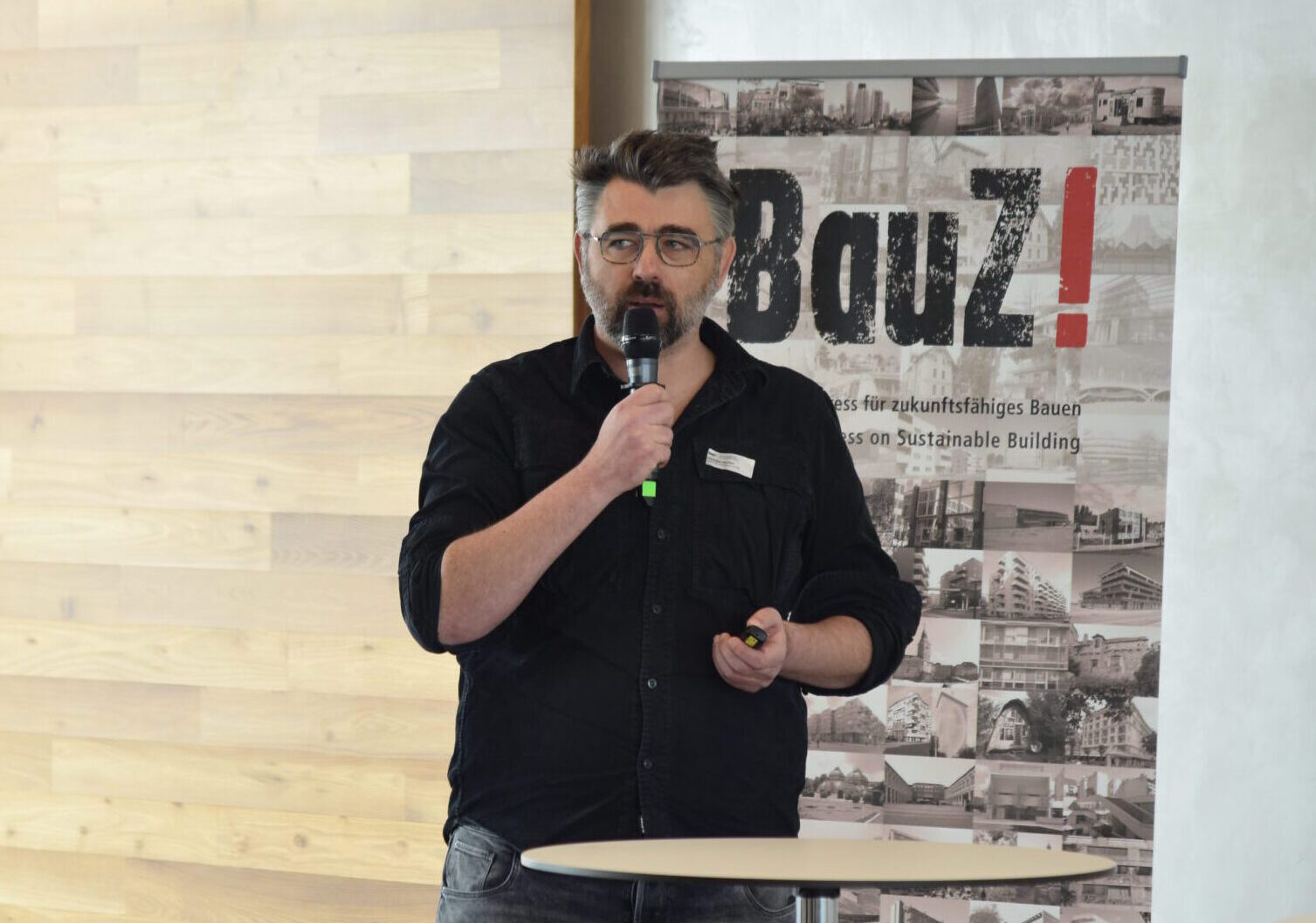
Foto: © Enzberg
Christian Kircher (smartvoll Architekten, Vienna) gave an overview of the ‘Kathi & Theo’ development in Munich – an unusual story of concrete and movement.
Session 3: New Life in Old Walls
Chair: Doris Österreicher (University of Stuttgart)
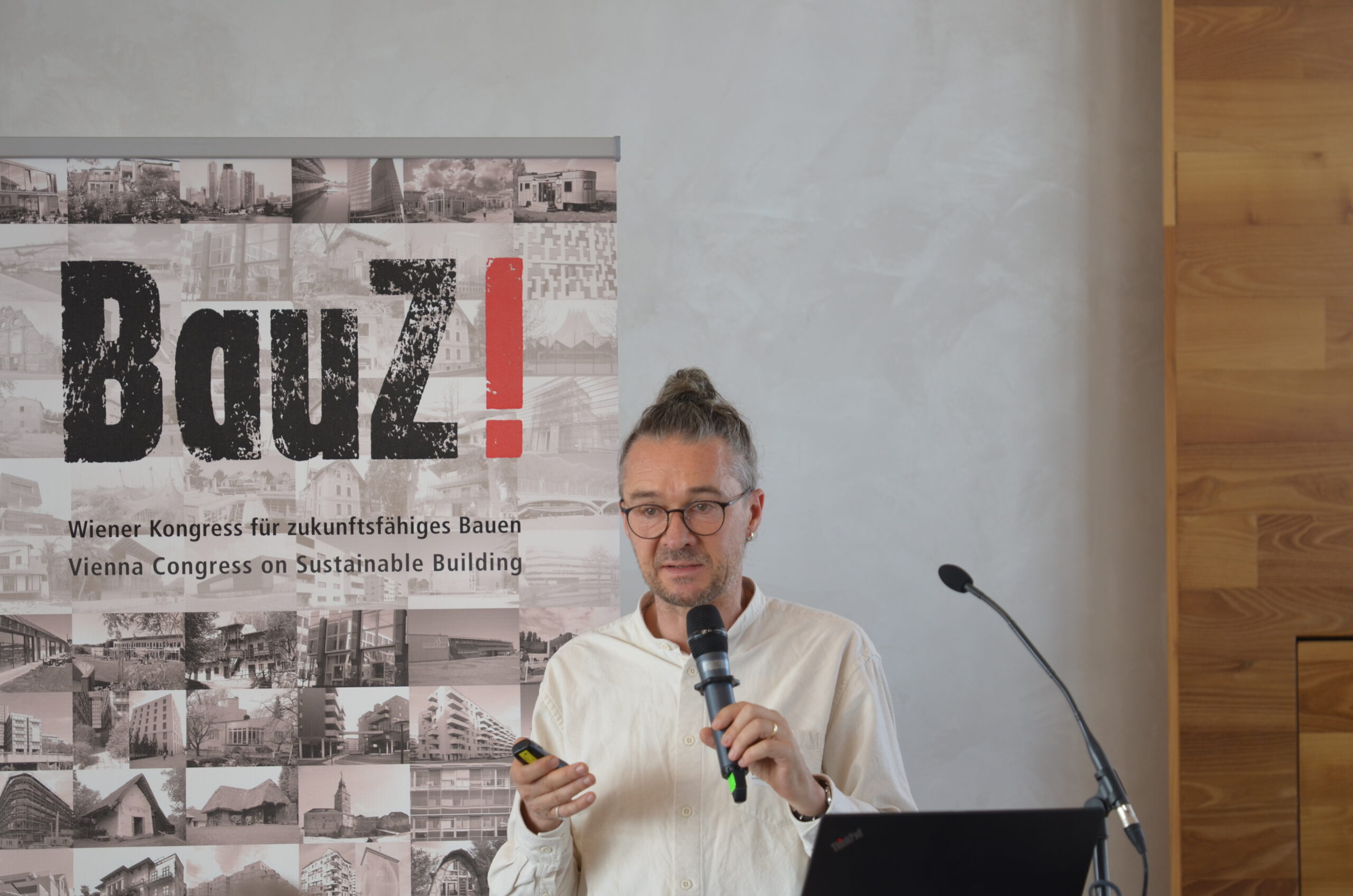
Foto: © Enzberg
Werner Schönthaler (Schönthaler Bausteinwerk) highlighted the potential of hemp blocks in renovation work, using the InRenova project as an example.
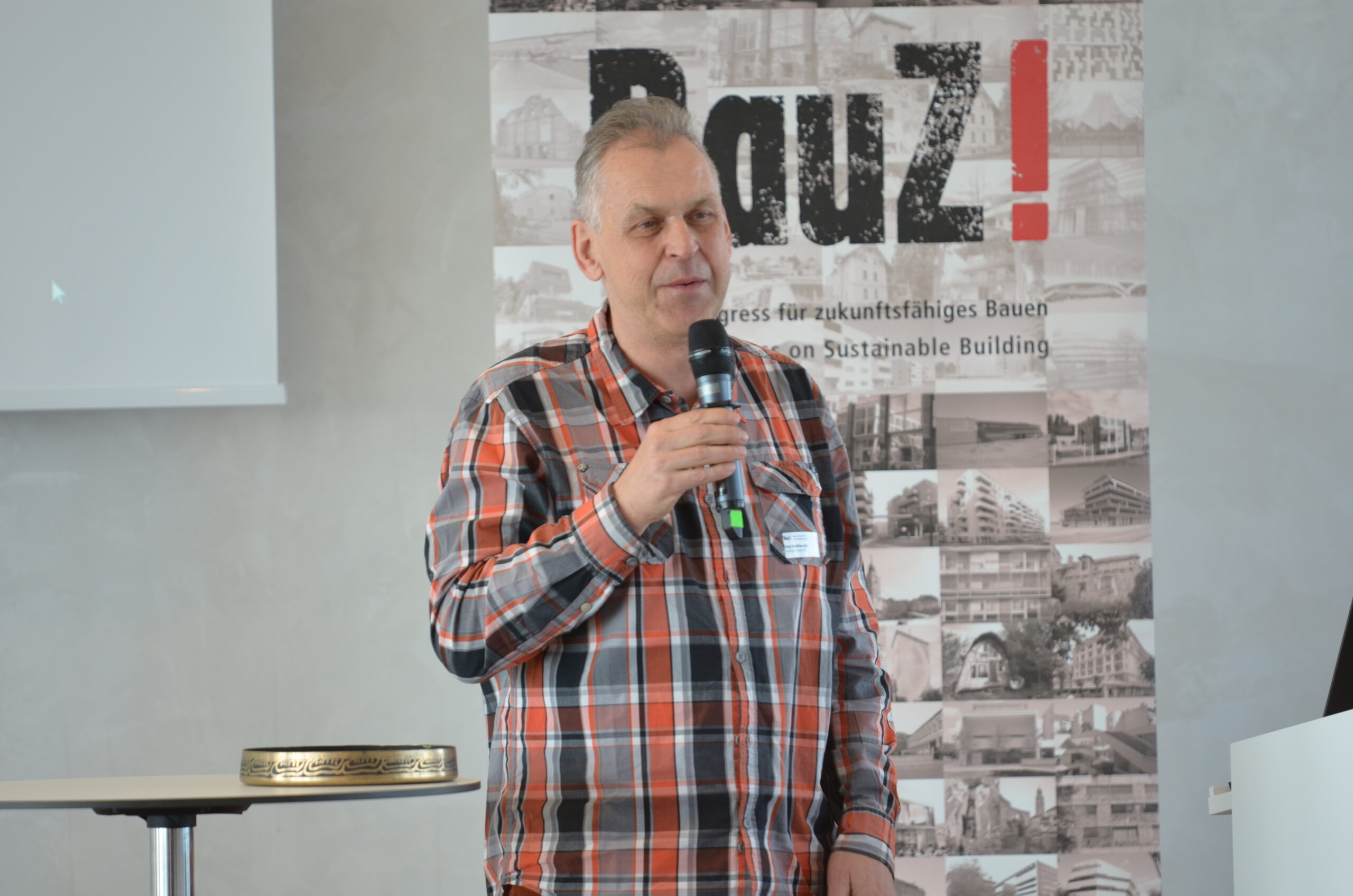
Foto: © Enzberg
Dag Schaffarczyk (Spreeplan Berlin) presented the circular, low-tech renovation of the Finowfurt village community centre (German Sustainability Award 2026).
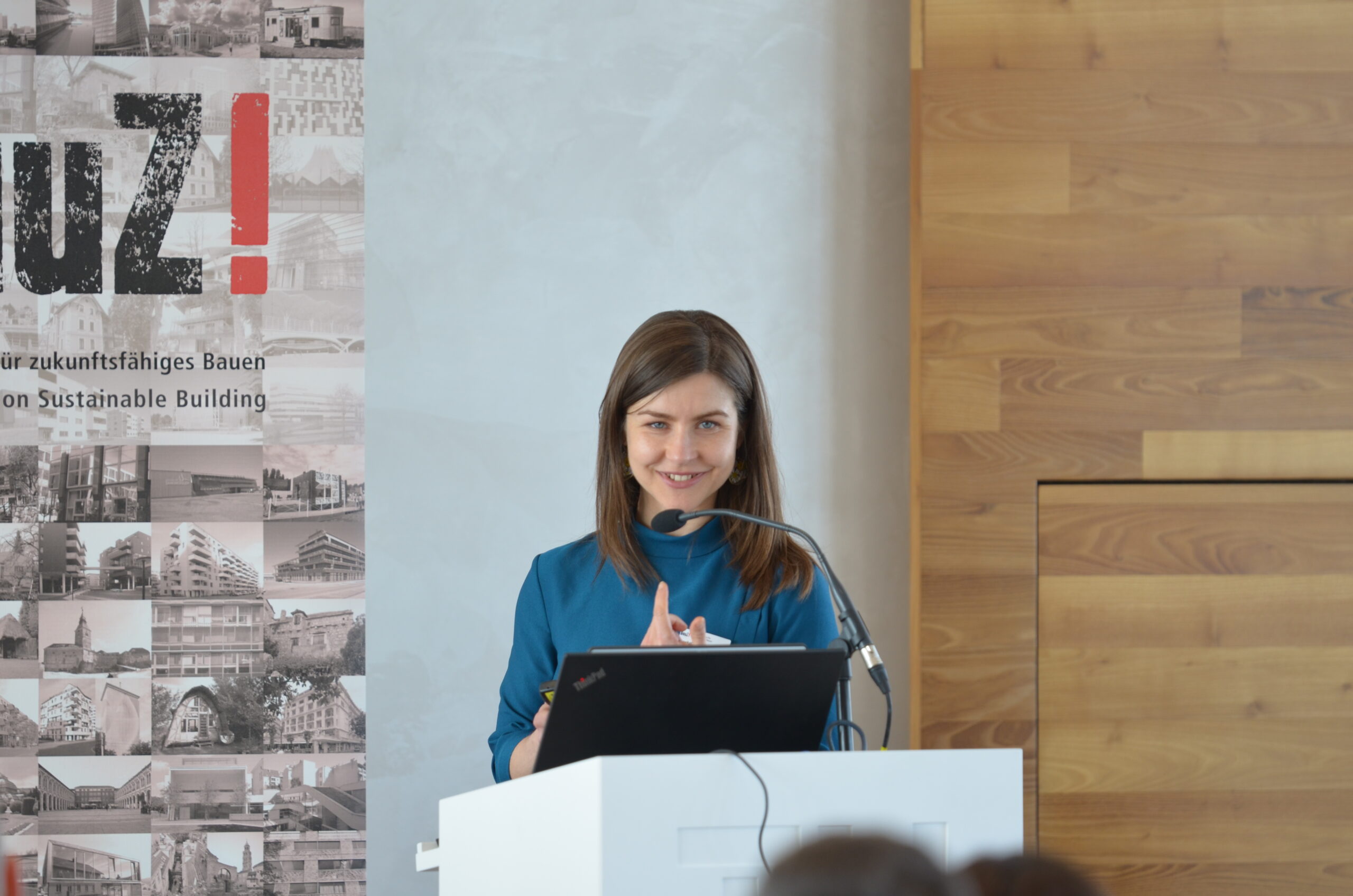
Foto: © Enzberg
Annekatrin Koch (Larix Engineering) reported on the conversion of a Viennese courthouse into a hotel (ÖGNI Gold certification).
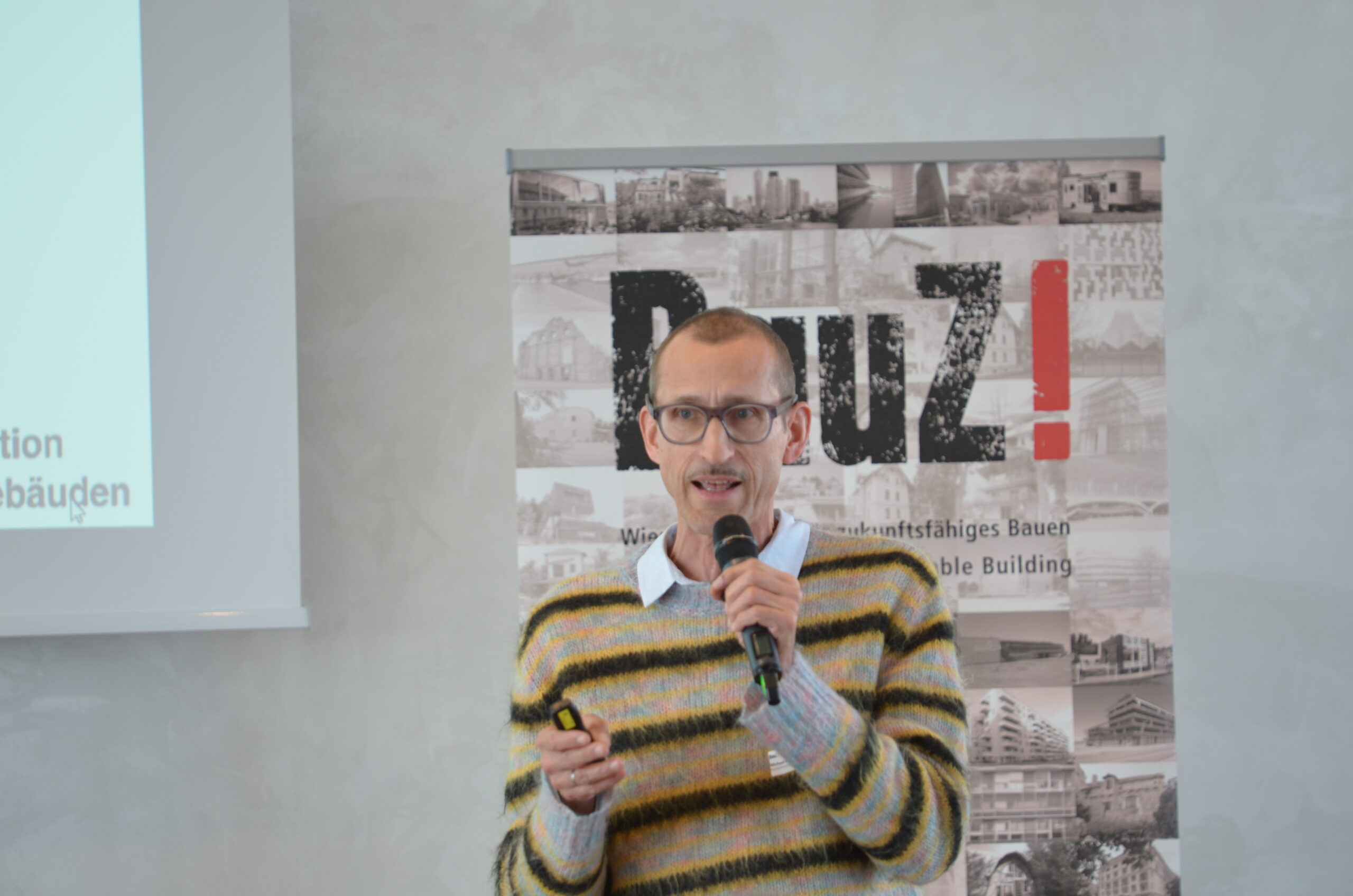
Foto: © Enzberg
Michael Rieper (University of Art and Design Linz) vividly described the contradictions between user needs and environmental impact in different refurbishment options.
Session 4: Circular economy and refurbishment at component level
Chair: Karin Stieldorf (Vienna University of Technology)
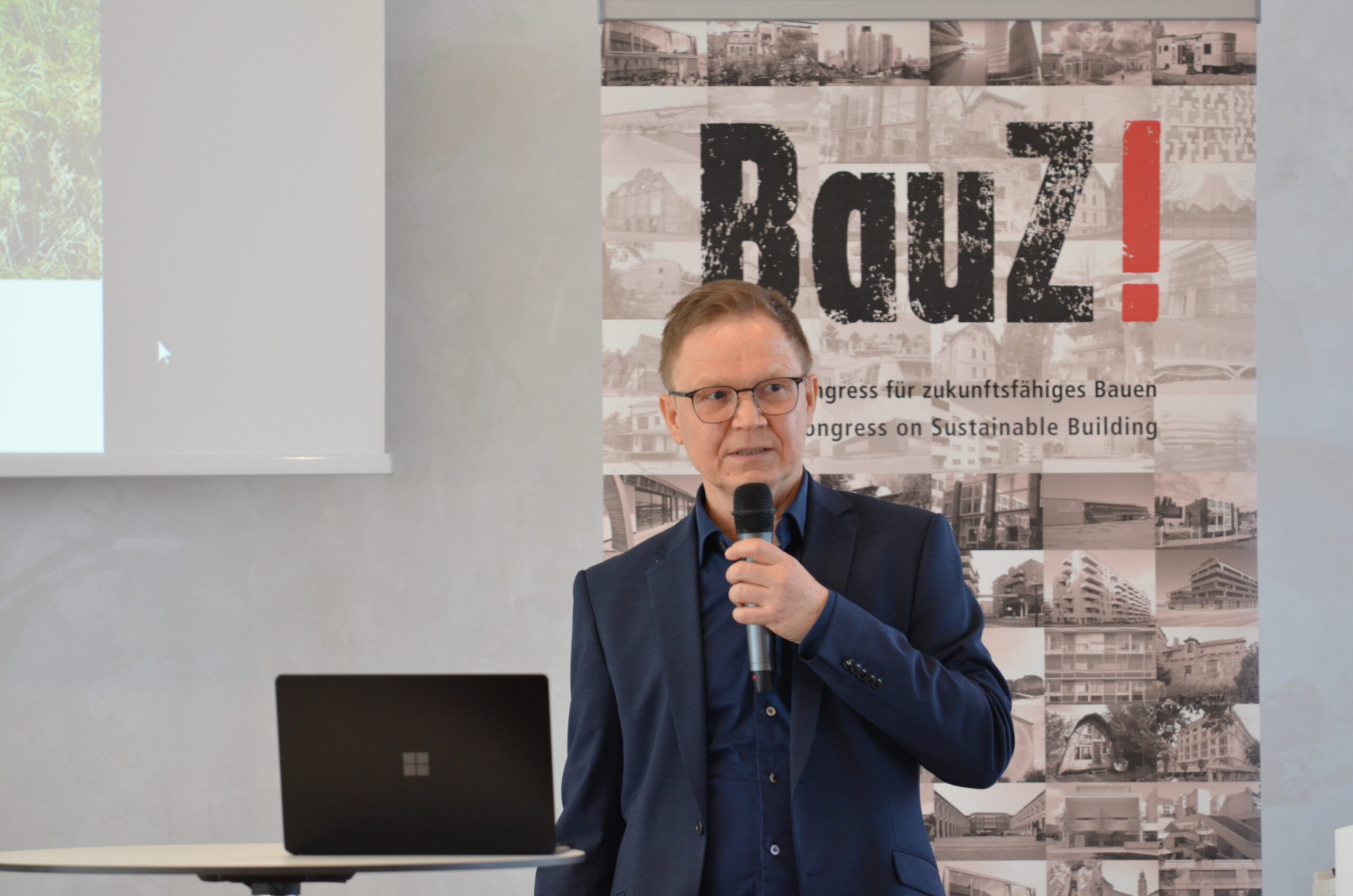
Foto: © Enzberg
Axel Laimer-Liedtke (Dietrich Untertrifaller Architects) presented the ‘Kon-Wert’ project, in which contaminated timber components were recovered as secondary materials.
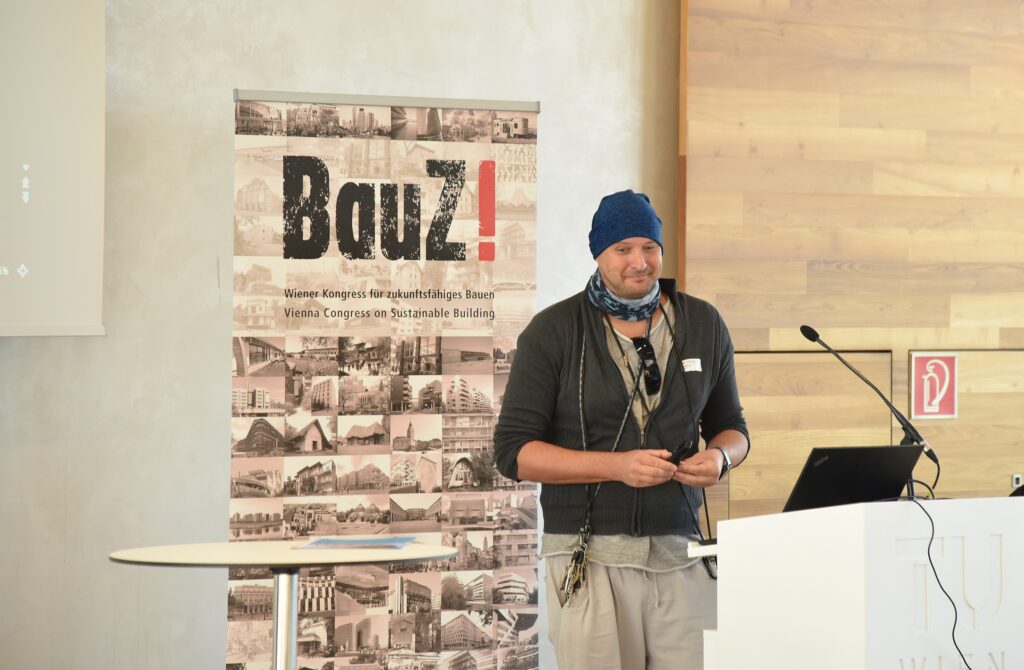 Foto: © Enzberg
Ulrich Pont (Vienna University of Technology) investigated the reuse of timber frame components from prefabricated houses – a ‘sure-fire opportunity’ for the circular economy.
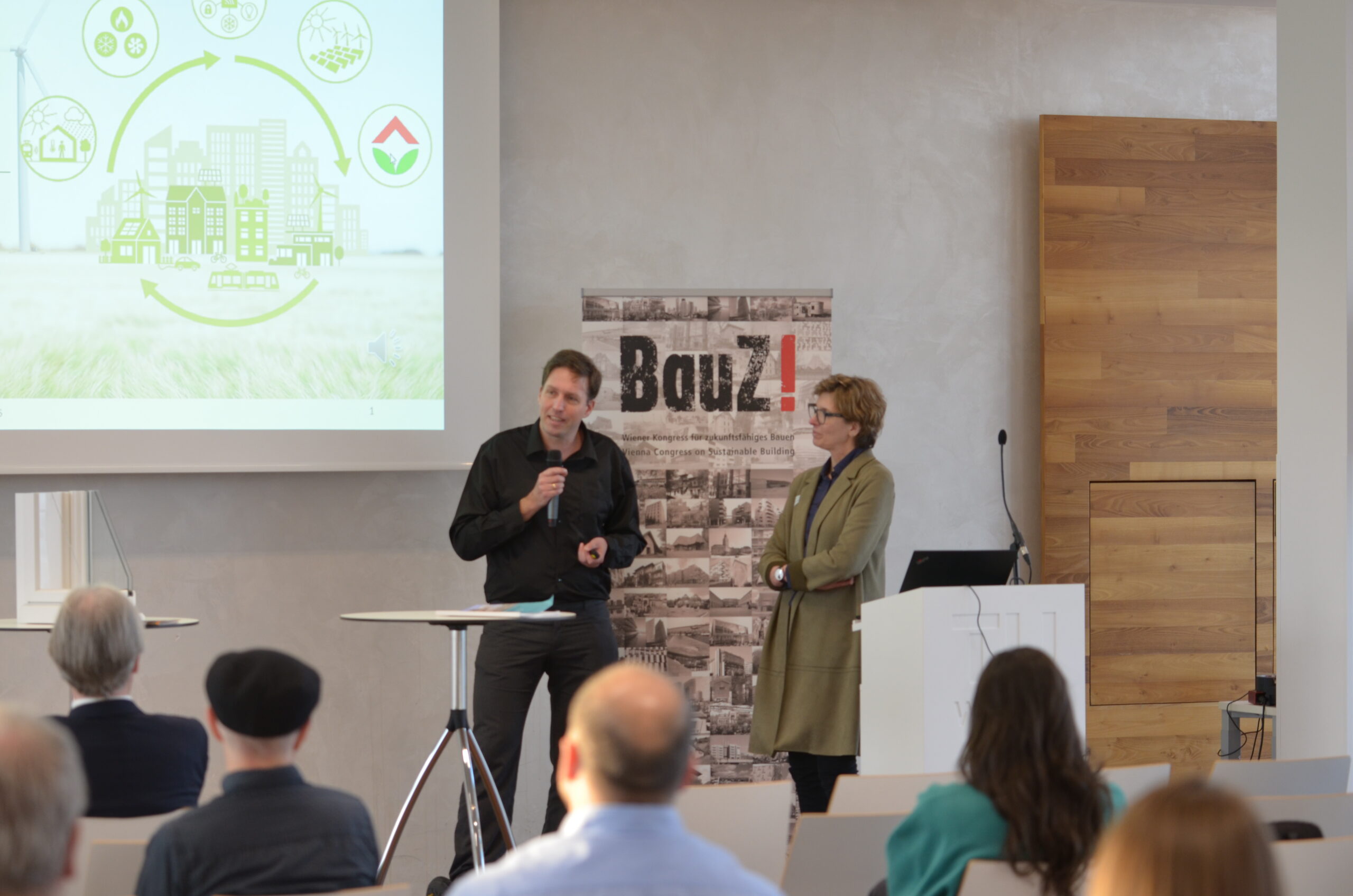
Foto: © Enzberg
Tobias Steiner (IBO) and Katrin Keintzel-Lux (baukanzlei) spoke about the heritage-sensitive window refurbishment at the Otto Wagner Lock Building.
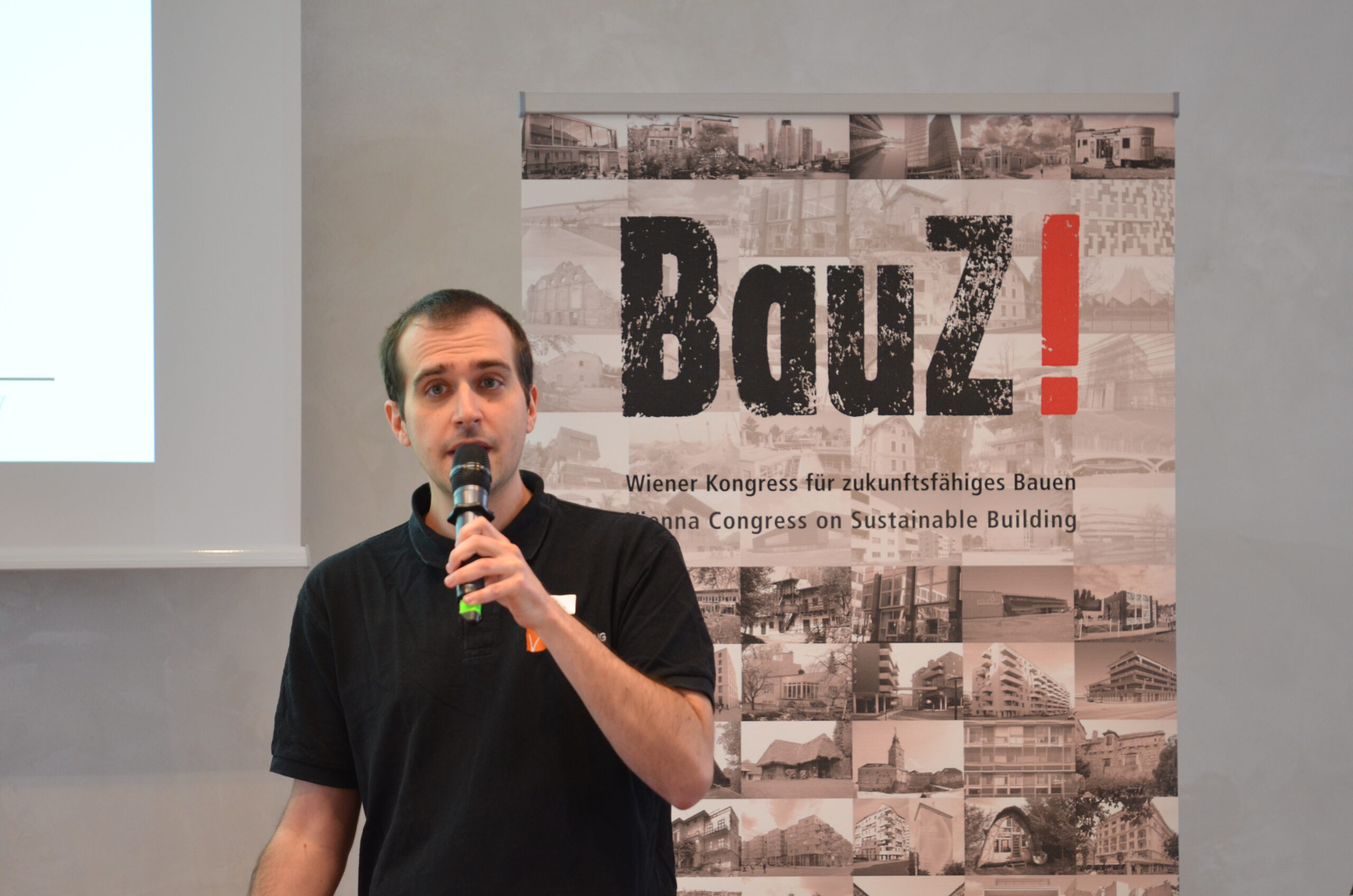
Foto: © Enzberg
Matthias Schuß (Vienna University of Technology) and Roman Meixner (Holzforschung Austria) presented energy-efficiency upgrades for historic box windows.
In-depth session: Services for professional practice
Chair: Rudolf Bintinger (IBO GmbH)
- Gordon Denner (FLO Systems): Condition assessment and leak testing in existing buildings.
- Bernhard Damberger (IBO): Hazardous substances in building structures – identifying risks.
- Elena Graf-Burgstaller (blue auditor): Retrofit Intelligence for sustainable neighbourhoods.
- Helga Noack & Heinrich Schuller: The renovation coach as a game-changer.
Session 5: Passive strategies and the human factor
Chair: Bernhard Lipp (IBO Vienna)
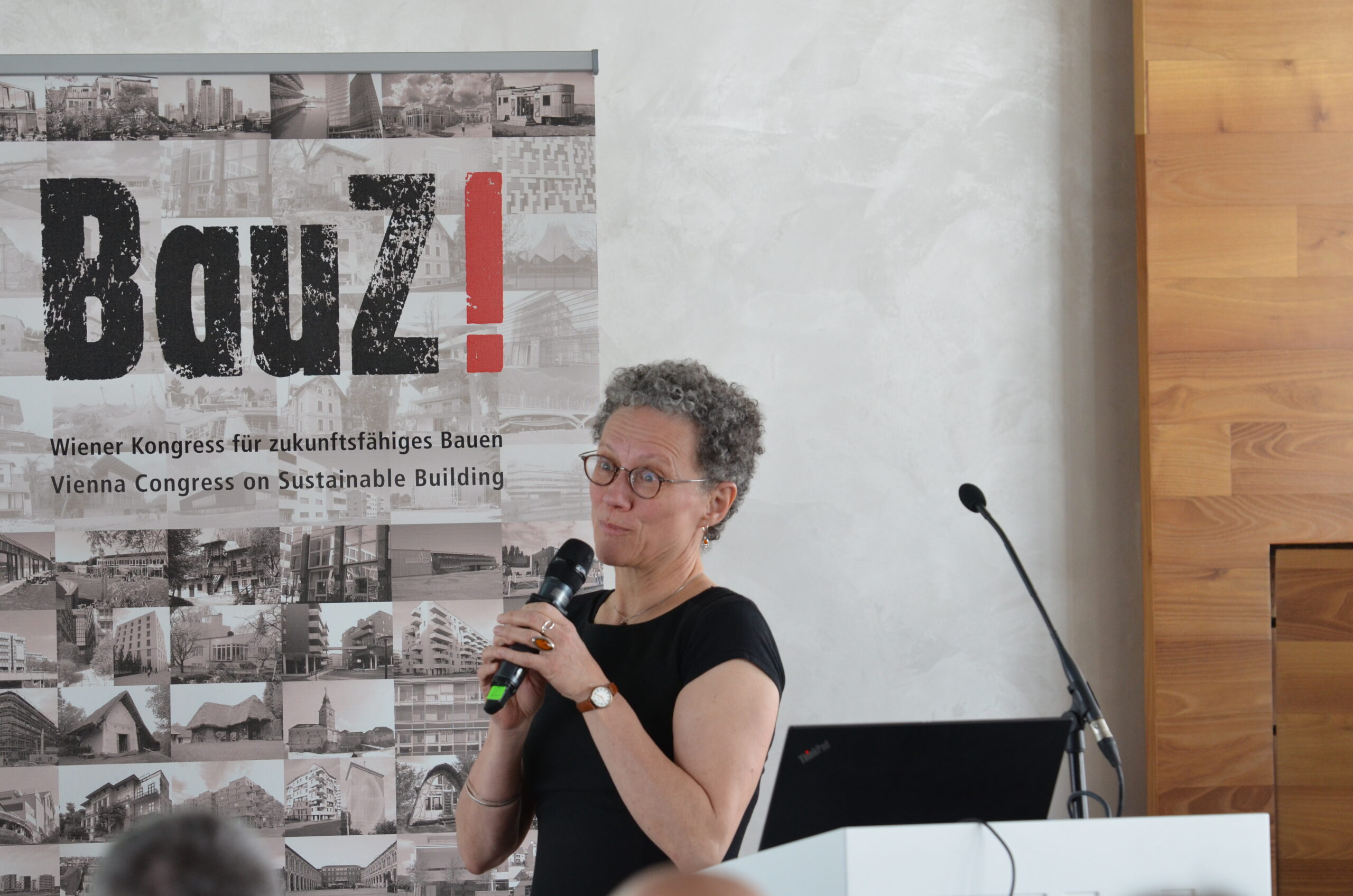
Foto: © Enzberg
Runa T. Hellwig (TU Berlin) spoke about human thermal adaptability in the context of climate change.
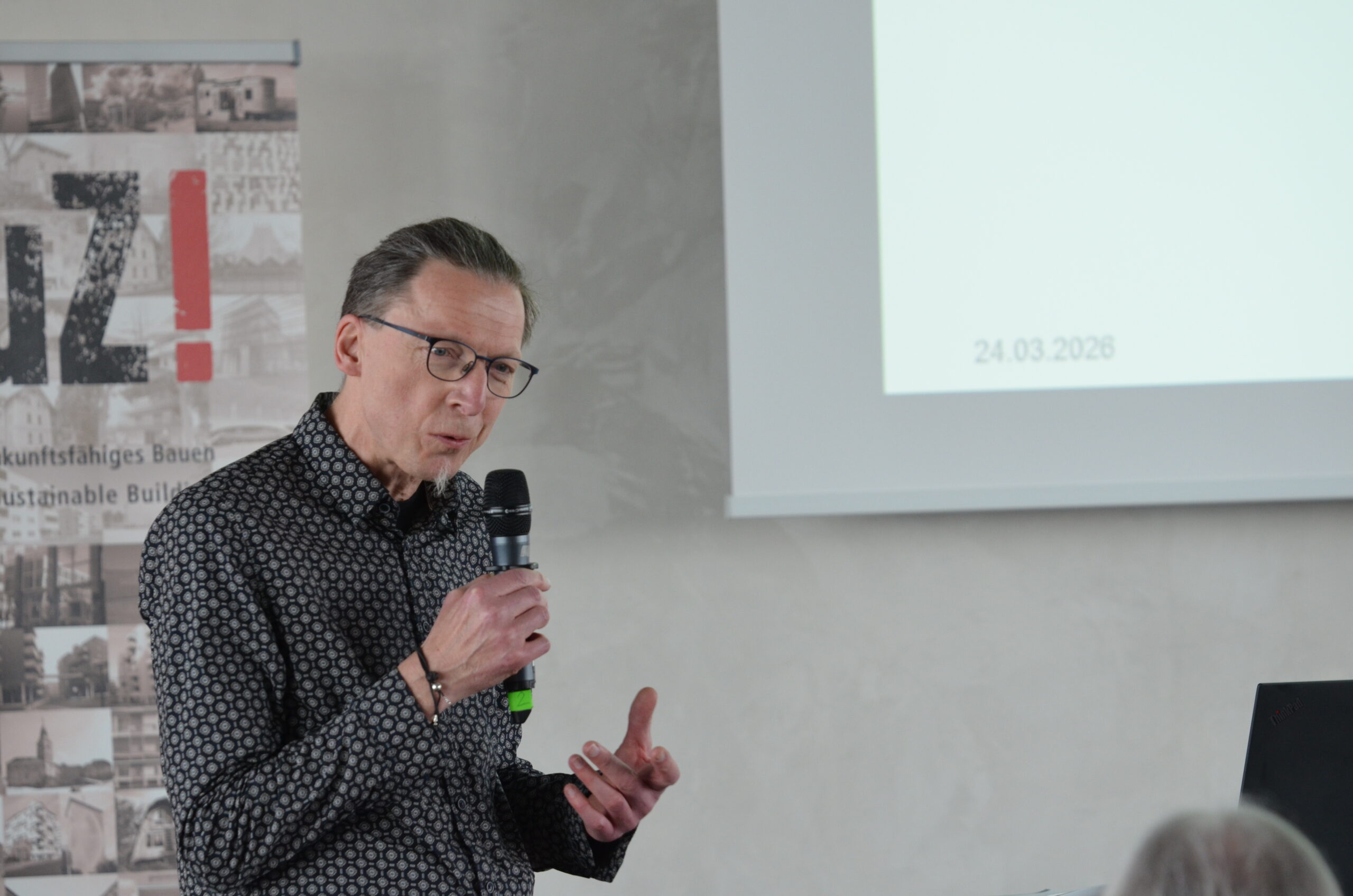
Foto: © Enzberg
Lutz Dorsch (Salzburg University of Applied Sciences) recommended designing heat-resilient buildings based on future climate data.
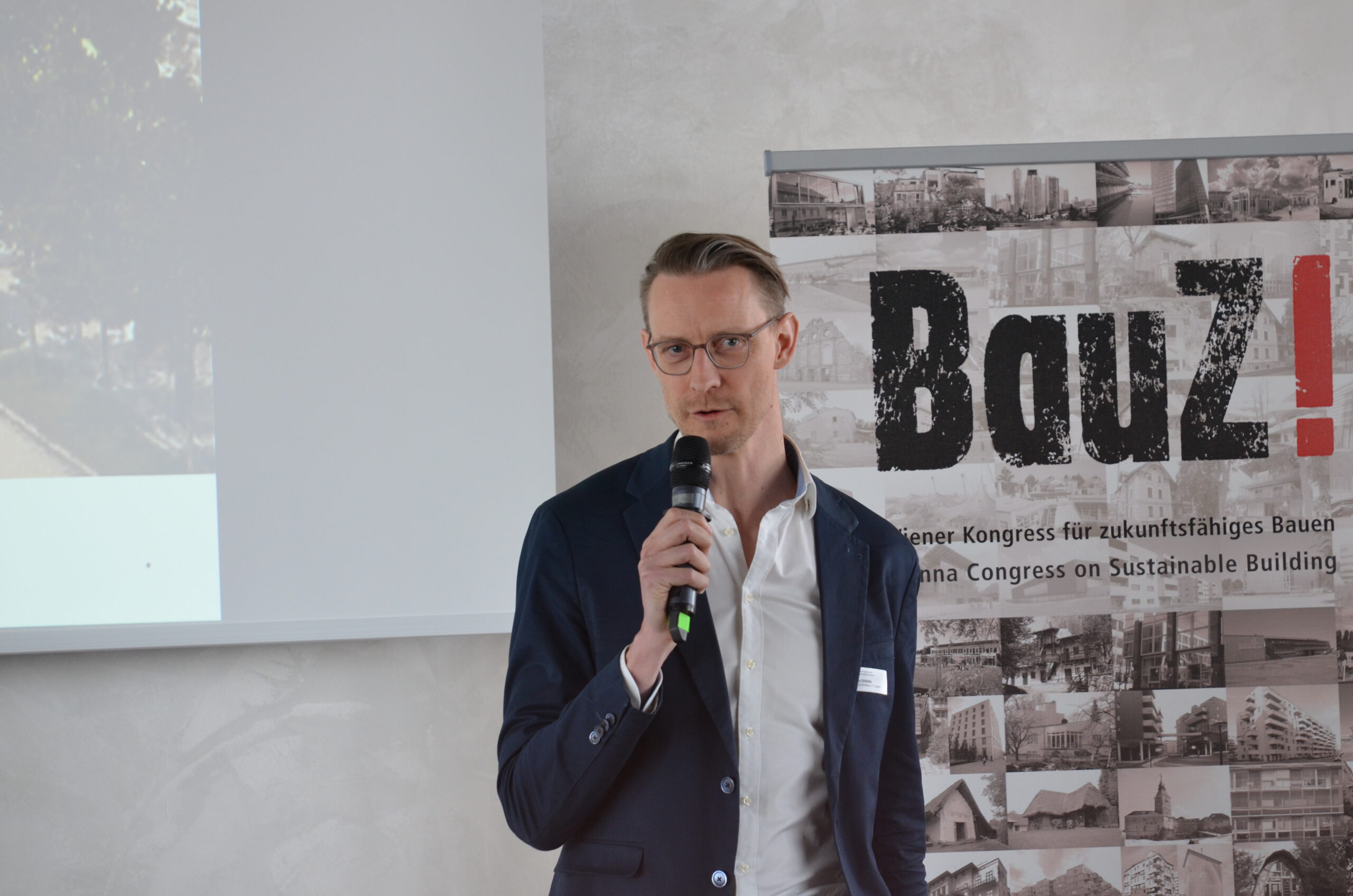
Foto: © Enzberg
Nikolaus Stützle (Rataplan) presented ‘Flying Gardens’ as a means of adapting to climate change through vertical greening.
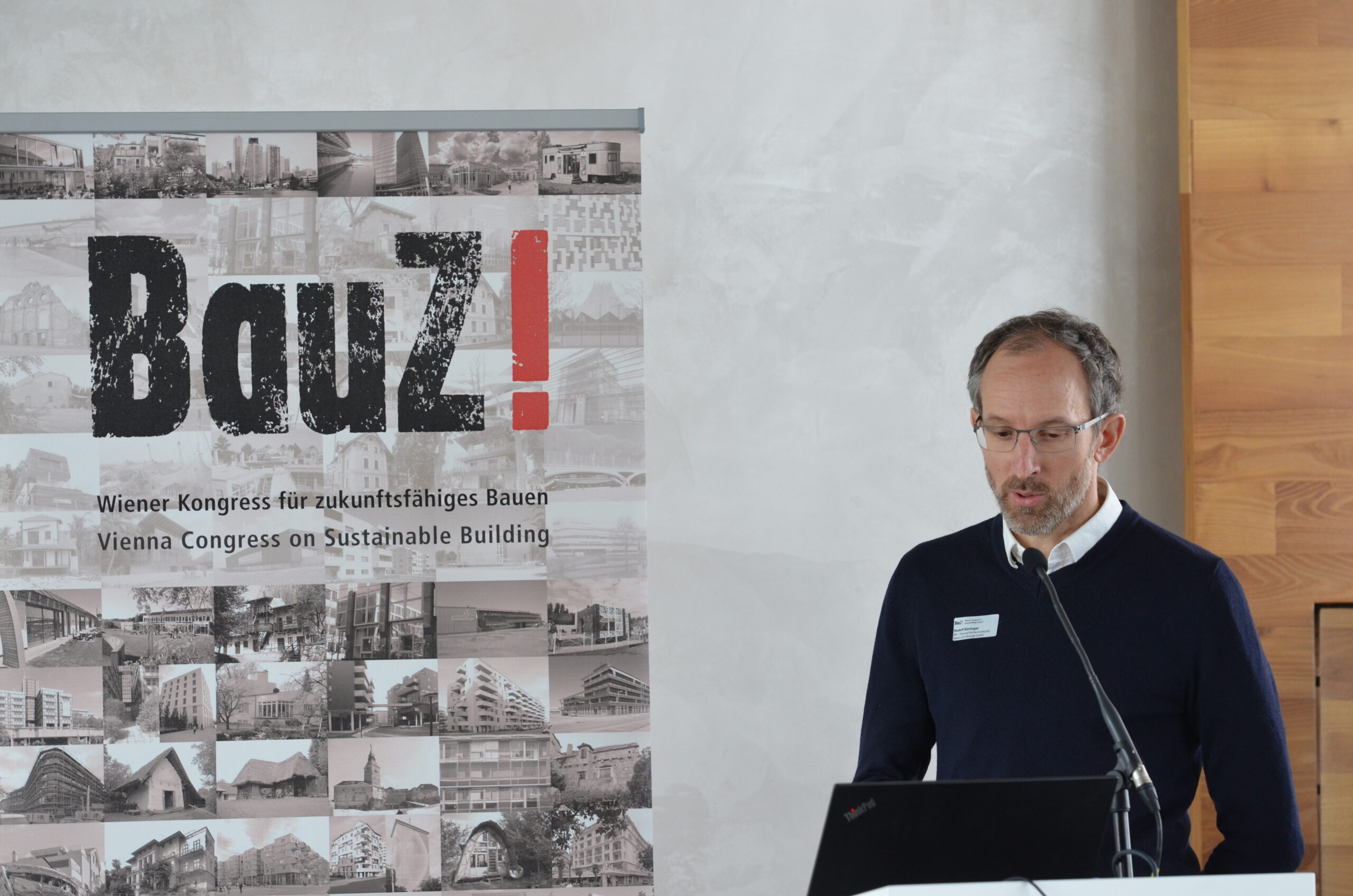
Foto: © Enzberg
Rudolf Bintinger (IBO) demonstrated the effectiveness of green building elements as a passive cooling strategy using measurement data.
Session 6: Transformation & Innovative Concepts
Chair: Johannes Kislinger (ah3 Architekten)
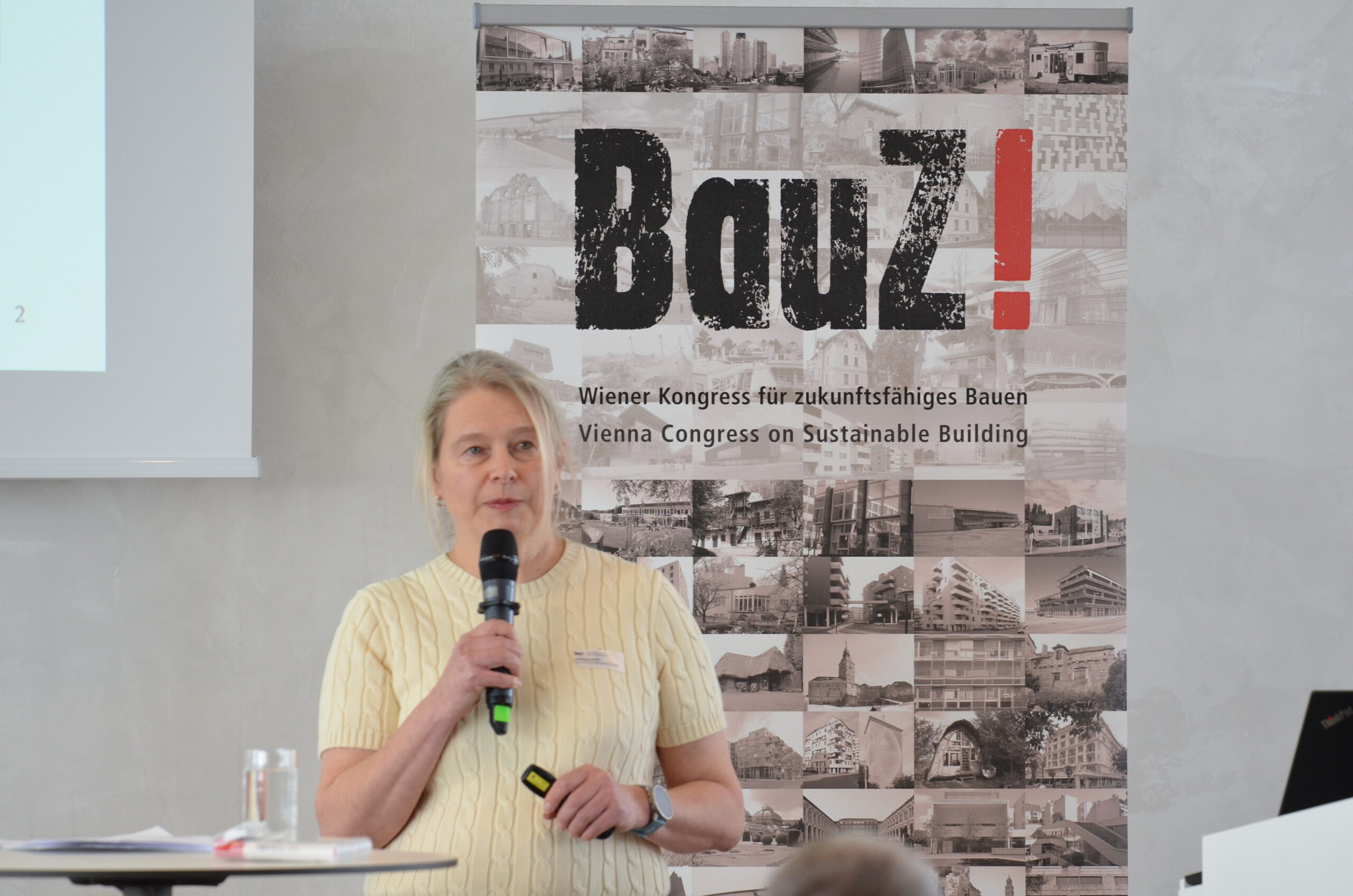
Foto: © Enzberg
Johanna Kairi (Stora Enso) showcased impressive transformations in timber architecture from Paris.
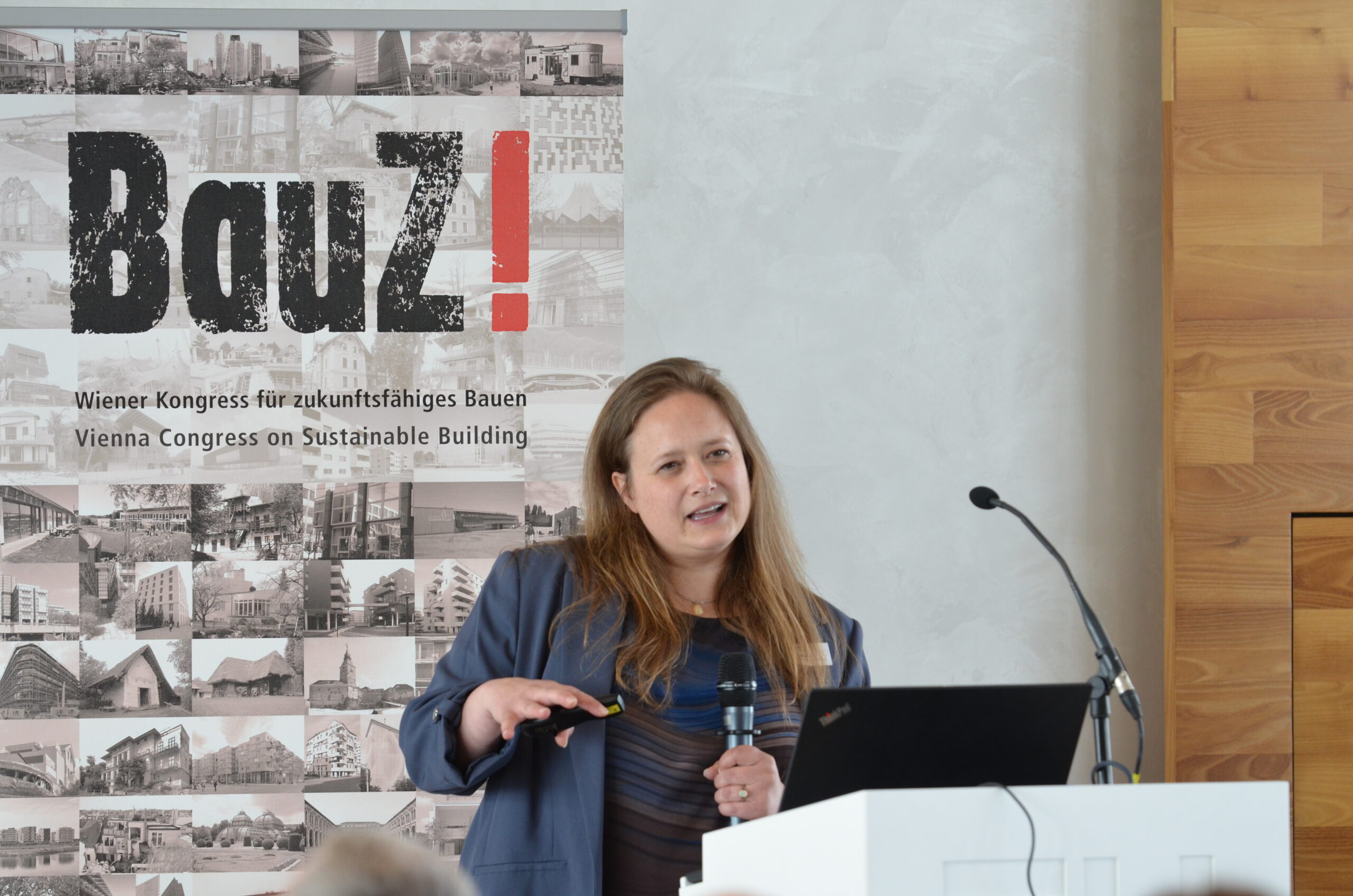
Foto: © Enzberg
Mirna Bukovčan (Rieder Smart Elements) demonstrated the conversion of a bus depot into a modern headquarters.
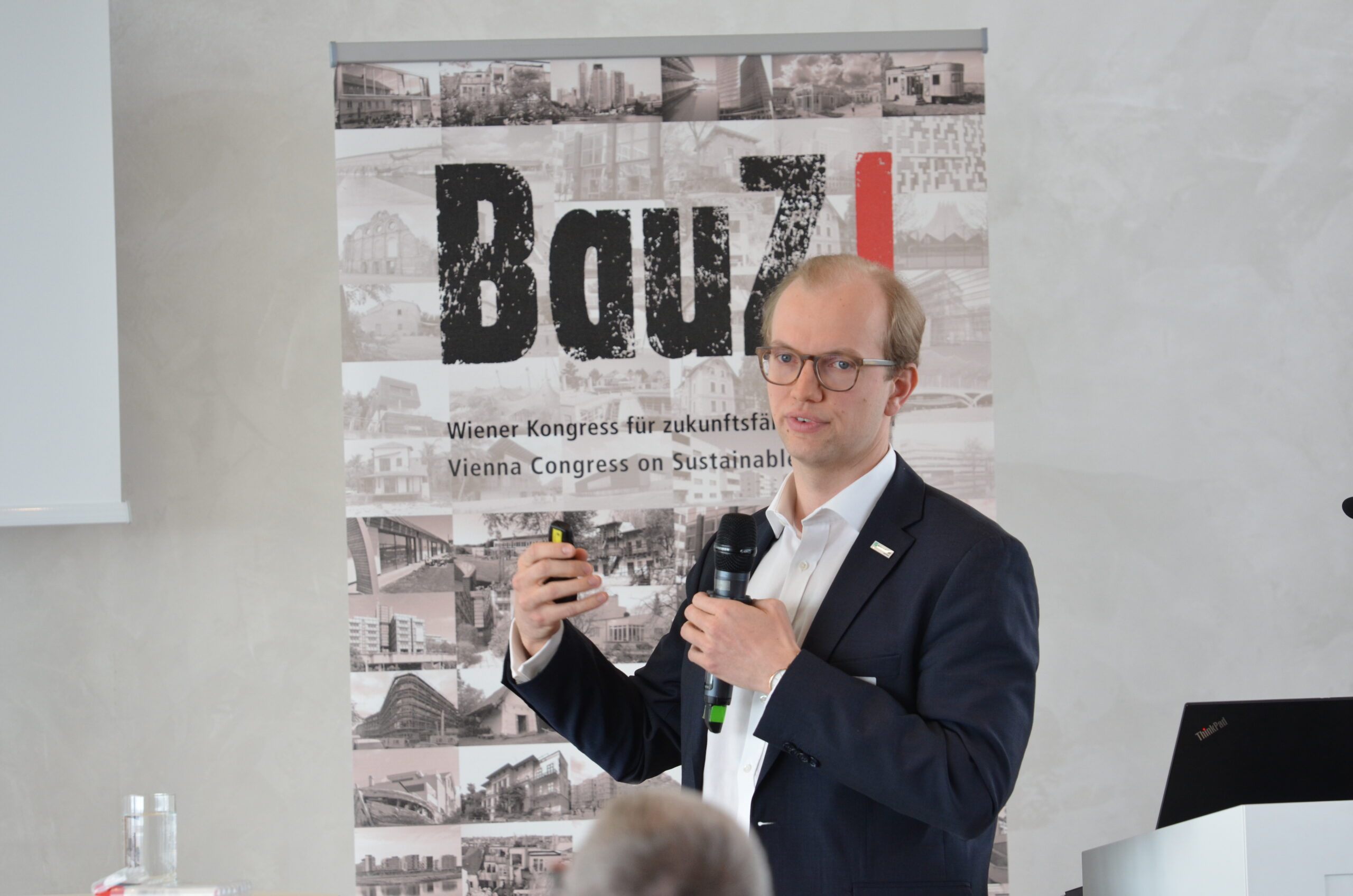
Foto: © Enzberg
Nikolaus Kremslehner (Fraunhofer Austria) presented ‘RE:STOCK INDUSTRY’, a project focusing on the vertical expansion of factory buildings.
Session 7: Building Services in Renovation
Chair: Runa T. Hellwig (TU Berlin)
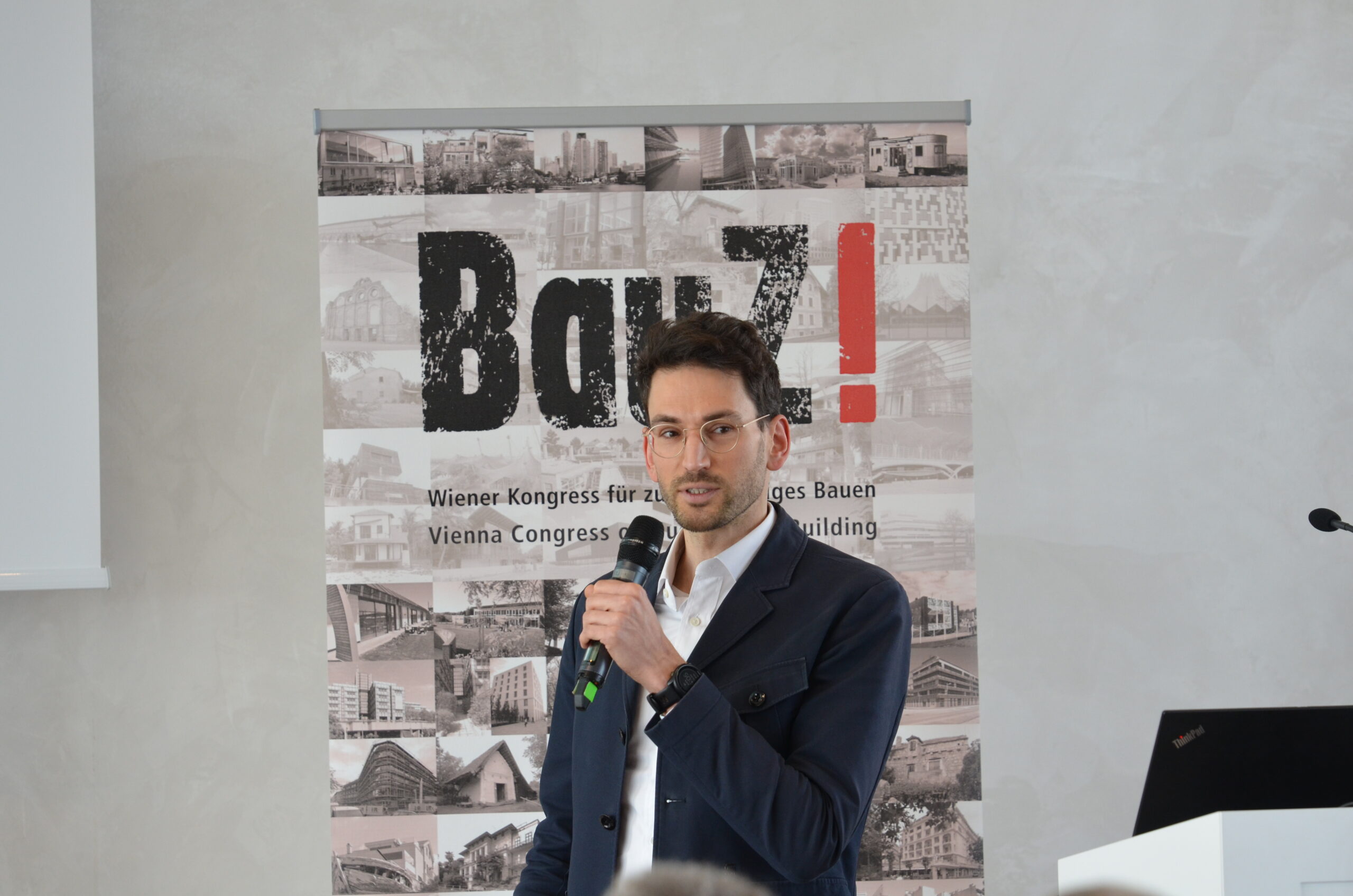
Foto: © Enzberg
Philipp Stern (IBR&I) presented ‘Sani60ies’ – a minimally invasive refurbishment method using activated façade elements.
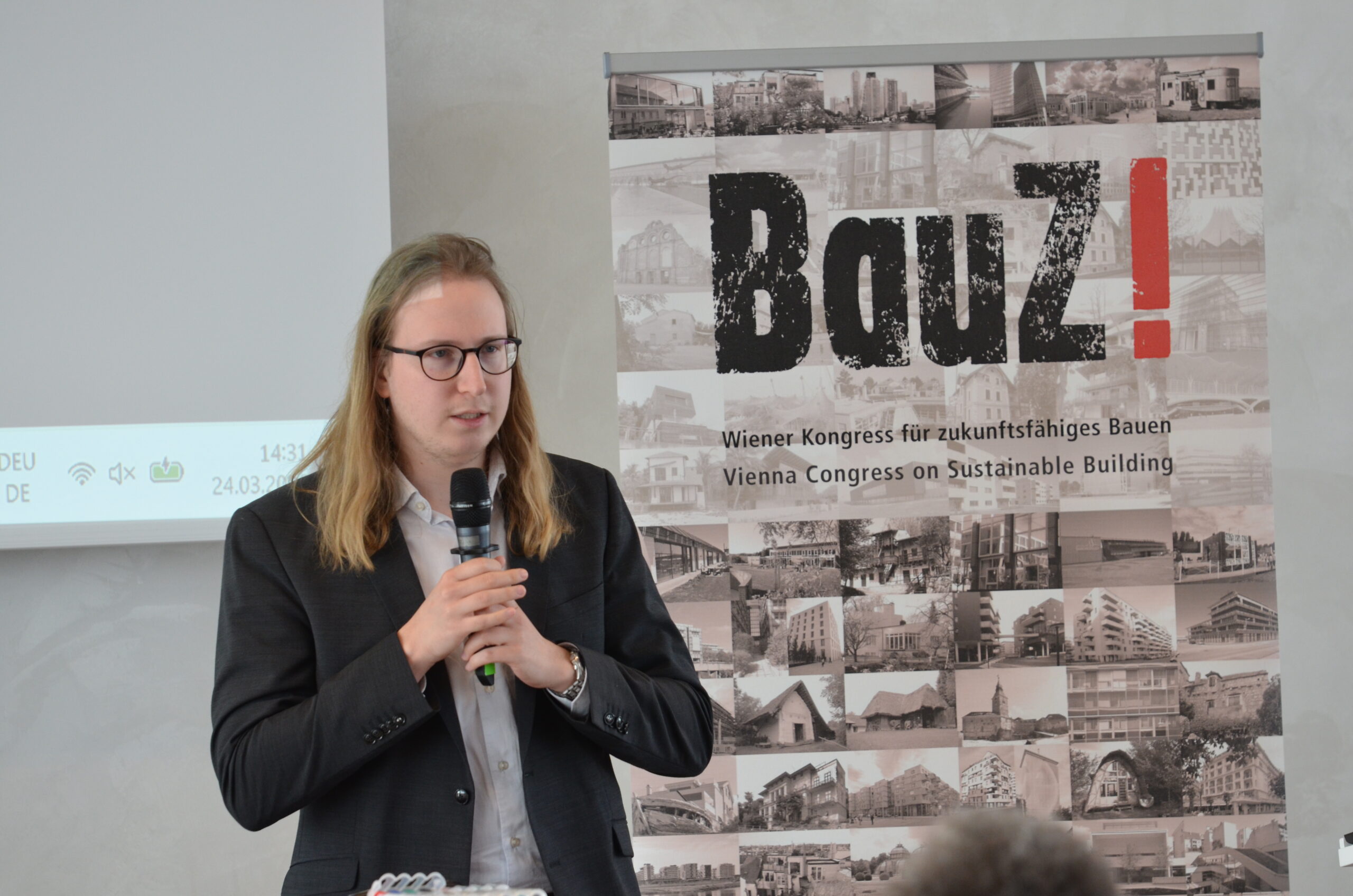
Foto: © Enzberg
Felix Wimmer (IBR&I) presented energy-self-sufficient radiator boosters designed to reduce the flow temperature.
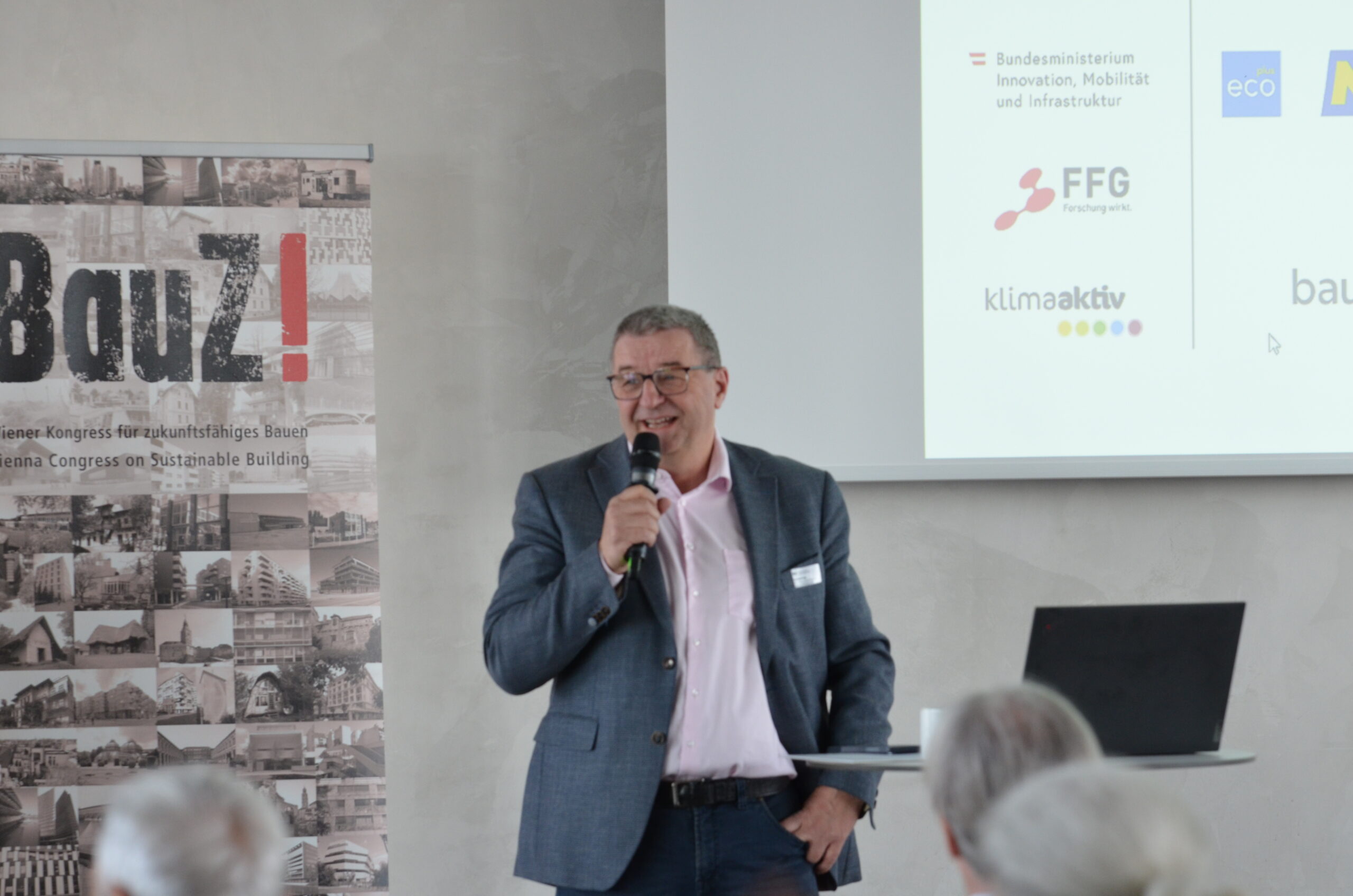
Foto: © Enzberg
Bernhard Lipp (IBO) demonstrated a counter-intuitive approach with ‘SMARTSAN’: fans that direct heat towards the floor, contrary to convection.
Workshops at the conference
- RENOWAVE.at & Holzforschung: Serial refurbishment and modern guidelines in timber construction.
- RENOINVEST: New financing models for building refurbishment.
- FH Technikum Wien: User requirements for comfortable and energy-flexible living.
-
EnerFlexBuildings: Energy flexibility through building component activation.
Field trip: Best practice in Vienna
- roots energy (1140 Vienna): 1980s timber façade and a modern ‘technology showcase’.
- Kauergasse 2 (1150 Vienna): EnerPHit standard with greywater treatment.
- Fernkorngasse 41 (1100 Vienna): Straw-board insulation and deep boreholes.
- Vienna Chamber of Labour (1040 Vienna): Complex 0° retention roof with greening and PV.
Foto: © Enzberg